Showing posts with label Malaysia Anniversary Stamp. Show all posts

Friday, April 13, 2012

Visit Malaysia Year

Issued in 1990

The Tourist Development Corporation of Malaysia (TDC), was established on 10 August 1972 as an agency under the former Ministry of Trade and Industry by an Act of Parliament.

Issued in 1994

On 20 May 1987, the Ministry of Culture, Arts and Tourism was established. In May 1992, the Tourist Development Corporation of Malaysia Act 1972 was replaced by the Malaysia Tourism Promotion Board Act 1992. This originated “ Tourism Malaysia “ internationally.

Tourism Malaysia's overall objectives are to promote Malaysia as an outstanding tourist destination both domestically and internationally. The aim is to increase awareness of Malaysia's unique wonders, attractions & cultures and aspire to develop domestic tourism and enhance Malaysia's share of the market for meetings, incentives, conventions and exhibitions (MICE). The increase in foreign tourists to Malaysia will subsequently increase Malaysia's tourism revenue.


LOGO OF VISIT MALAYSIA


Wednesday, April 11, 2012

1991 Malaysia 25th Anniversary of MARA

Issued on 1991
INTRODUCTION AND HISTORY

The introduction of
the People's Trust Council (MARA), an agency of the Ministry of Rural and Regional Development, was established in March 1, 1966 under an Act of Parliament as a statutory body as a result of the first Bumiputera Economic Congress resolution in the previous year.

It is the duty of the Council to promote, encourage, facilitate and undertake economic and social development within the federation and especially in rural areas.

Poetry ESTABLISHMENT OF MARA

TRUST AND WRATH OF THE PEOPLE (25 OF MARA)

USMAN DISORDERS November 1991

Our appreciation to the creator, SN Dr. Usman Awang, who gave this poem to MARA.


Council of People's Trust

Birth of a sacred name sparks the anger of a nation's socio-economic backwardness still spreads out his hands to the fans in his homeland of nearly ten years of independence. Beginning in colonial times known as RIDA - Village Development Board and the Industrial A thin shadow Critics sharp easing the way English people against the colonial policy. 


RIDA is ticking in 1953 when nationalistic flaming embers burning passion not able to support indigenous people independent voice resonates harder material backwardness and poverty. Year one thousand nine hundred and sixty-five First Bumiputera Economic Congress formulate all sorrow sorrow that we have well people are still holding the string Why As people reach the bucket and all the anger melted ravine be sworn trust a vision 

At the moment that determines RIDA 1966 was dikerandakan in history for a new name the sacred Council of People's Trust is now 25 years have been ticking MARA Could reach the age of adulthood will Bumiputera Economic Congress Coordination arrived strip back the vision of two thousand Evaluate the effectiveness of WRATH and Trust People who instilled.

Monday, April 9, 2012

10th Anniversary of the Anti-Drug Association of Malaysia (LAM)


History of PEMADAM

Association for the Prevention of Drug PEMADAM Malaysia was established on March 22, 1976. Constitutional Prime Minister of Malaysia is the Patron of LAM and he will be appointed President of the National EXTINGUISHER. the President of the National EXTINGUISHER:


i. YB Dato 'Athi Nahapan - has been appointed as the first President in March 1976 - May 1976

ii. YB Dato 'Rais Yatim has been appointed as the Speaker of the Second in June 1976 - May 1987.

iii.YB Tan Sri Dato 'Seri Megat Junid Megat Ayob bin has been appointed as President of the Third on June 9, 1987 - November 1999.

iv. YB Dato 'Haji Haji Zainal Abidin Zin was appointed as the Speaker of the Fourth PEMADAM on December 16, 1999 - October 2006.

v. YB Dato 'Mohd. Johari bin Baharum, Deputy Internal Security Minister has been appointed as the Speaker of the Fifth PEMADAM on 1 November 2007 to date.

LAM administered by a body called the Council of National Drug PEMADAM and to facilitate the management and implementation machinery, and activities, the bureau - the bureau has been established. As a body of national character, LAM also move in the state, district and units. LAM has been established and may be said LAM has become " a household name . " As a non-governmental organizations, LAM had been active to help the government fight the National Drug-Main Enemy. At home, PEMADAM close relationship and cooperation with relevant ministries and departments, among Ministry of Education, Youth and Sports, Ministry of Health, Ministry Information, Ministry of Internal Security, the National Drug Agency and the Royal Malaysian Police. LAM is also important to look at the role of religion and therefore always get constructive inputs from these bodies. Role and main tasks are education PEMADAM dissemination of prevention and anti-drug message. To achieve this goal, PEMADAM focus on youth, students, workers, educators and parents. Various courses, seminars, workshops were held to be anti-drug message can spread widely and skills in drug prevention work can be improved. PEMADAM been organizing, promoting, organizing or involved in projects and programs such as courses panel speakers, anti-drug courses for parents , anti-drug seminar for youth anti-drug badge scheme for school students as well as workshops for handling IT workshop at the time of this explosion of information technology. Although LAM is not engaged in the business of treatment and rehabilitation, but LAM is very sensitive to bad luck and suffering those who are closest to the addicts as parents, children and wife and relatives. Thus, LAM established remedy, as the reference and support to family members of addicts referred to as the silent sufferer or " silent sufferers . " Overseas, in the international arena, the LAM is also very active at all, especially in countries ASEAN neighbors in Asia. PEMADAM become the founder of the establishment of organizations IFNGO (International Federation of Non Government Organisations), a body of international bond against drug use. IFNGO Secretariat is located at the Headquarters of the National EXTINGUISHER. IFNGO also gave birth to the ASEAN-NGO workshop, also an anti-drug forum, but specifically for the ASEAN countries. Good efforts have been recognized IFNGO ECOSOC (Economic & Social Council) of the United Nations. PEMADAM also active in the activities of WFTC (World Federation of Therapeutic Communities) and forums organized anti other drugs either by the Colombo Plan or other Anti-Drug Agency, other United Nations.


What is LAM ?

LAM is an acronym for Anti-Drug Association of Malaysia . It is a voluntary organization established to help those with problems arising from drug use, to give guidance to the public about the dangers of drug use and also to get cooperation from the public in an effort to eradicate DRUGS.


PATA Conference 14 April 1986.

A set of six stamps commemorating PATA conference was released on 14 April 1986.

Check out for the coinage of PATA 86

International Literacy Year 1990

Malaysia, along with other nations, was requested by UNESCO to join in the International Literacy Year Cerebration. Since 1961, The Community Development Division of the Ministry of  National and Rural Development was given the responsibility of combating adult illiteracy in the then Federation of Malaya. The war on illiteracy was extended to Sabah and Sarawak in 1963 after the formation of Malaysia. This is the continuing programme for the two states where we managed to reach about 16.4% of total adult illiterates. To date, 72% of Malaysian adults are literate.

The celebration is to bring to attention of Malaysian Community of all levels importance of literacy and functional literacy for without which efforts towards national development would be impeded.

Though Malaysia's literacy rate is high at 72%, it is quite necessary to inform the world especially the third world, of our success for they may want to emulate our experiences. With Malaysia's success, other (small) nations may look up to us for moral support in they war against illiteracy. This may also open up the opportunity of Malaysia to collaborate with less fortunate nations in other fields relating to human resource development, beginning with illiteracy eradication.

No doubt Malaysia's illiteracy rate is very low but there is still a dire need to formulate and implement Life Long Education. Activities where adults, through Non-Formal Education be given knowledge and skills to enable them to be functionally productive. By participating in the 1990 International Literacy Year Celebration, Malaysians can be made to realise importance of combating illiteracy until such a time when our literacy rate is one hundred percent.

TECHNICAL DETAILS

Date of Issue : 8th September 1990
Denomination : 20c, 40c, $1.00
Stamp size : 28mm x 38mm
Paper : SPM watermarked, Phosphor coated
Printing process : Lithography
Printer : Security Printers (M) Sdn. Bhd.
             46650 Petaling Jaya, Malaysia.
Sheet Composition : 100 Stamps
Designer : Shamall (Syarikat Senika)

Friday, April 6, 2012

100 Years Before And After - An Electrifying Pace


Date of issue : 03/09/1994

Denomination : Se-tenant pair 30sen & RM1.00

Stamps Designer : Mega Dot SDN BHD

Printer : Security Printers (M) SDN BHD

Thursday, April 5, 2012

100 Years Of X-Ray


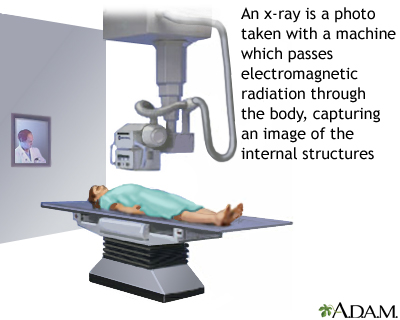
X-rays are a form of electromagnetic radiation, just like visible light. In a health care setting, a machines sends individual x-ray particles through the body. A computer or special film is used to record the images that are created.

Structures that are dense (such as bone) will block most of the x-ray particles, and will appear white. Metal and contrast media (special dye used to highlight areas of the body) will also appear white. Structures containing air will be black, and muscle, fat, and fluid will appear as shades of gray.


The test is performed in a hospital radiology department or in the health care provider's office by an x-ray technologist. The positioning of the patient, x-ray machine, and film depends on the type of study and area of interest. Multiple individual views may be requested.

Much like conventional photography, motion causes blurry images on radiographs, and thus, patients may be asked to hold their breath or not move during the brief exposure (about 1 second).


Date of issue : 29/05/1995

Denomination : Se-tenant pair 30sen & RM1.00

Stamps Designer : Eka IPR Agensi

Printer : Security Printers (M) SDN BHD


Wednesday, April 4, 2012

10th Anniversary of Malaysia (1963-1973)

10 years after the formation of Malaysia, a set of stamps was released on 31 August 1973 to commemorate the 10th anniversary of Malaysia (see below). It was correct that Malaysia was 10 years old in 1973!However, this understanding of how old is Malaysia is becoming unclear as the equation of independence to nationhood deeply rooted in the mind of people.

100th Anniversary of Sabah


The Sabah Centenary marks 100 years of Sabah’s social, economic and political developments, that is from 1991 when she became a colony under the British Chartered Company until today.
The year 1981 commemorates the passing of a 100 years, a truly formative and developing period in the history of Sabah. The Centenary celebrations gives emphasis not only to Sabah’s progress during the past 100 years but also to the participation of the people in the celebrations on a statewide basis.

The celebrations started in Penampang on 1st January, 1981, followed by other districts and sub-districts, all of which had drawn up elaborate programmes. Kota Kinabalu, the state capital, will have the celebrations on 31st August, 1981, the National Day.

In all the districts except Kota Kinabalu the celebrations take the form of pesta rakyat, or the festival for the people. This is a more elaborate version of the traditional for the people. This is a more elaborate version of the traditional tamu besar, featuring agricultural exhibitions, cultural and other performances, floats and lantern processions, firework displays, to name only a few. In Kota Kinabalu the main attractions will be the CENTENARY EXPO.

The theme of the celebrations is ‘Sabah Berjaya Sebangsa’ or ‘Sabah Succeeds As One People’. The theme recognizes the reality that Sabah is a society of many ethnic origins and religions. The theme shows the prime concern and overriding objective of the present leadership, that is, to forge unity and achieve progress as one people, now and in the future. The theme is intended to make people more aware that unity and solidarity are vital because all who live in Sabah share a common destiny.

Each individual participates in the celebrations in his own way, some actively in organized activities such as water sports, the big walk organized by the Federal Officers’ Association, Sabah Branch, or the gotong royongs which take place in many districts. Others participate by giving donations to the centenary efforts. For instance, the Japanese community in Sabah has donated $800,000 towards the cost of the firework displays in 30 districts and sub-districts in Sabah. The various chambers of commerce and commercial organizations have likewise made contributions in money or in kind. Participation in the Centenary Expo is a unique experience. The widespread cleaning and sprucing up of towns and villages through gotong royong efforts is another form of participation in the Sabah Centenary. Students and members of the public take part in the many competition such as the history-writing competition, the painting competition, the poster competition, the Centenary Song writing competition and many others, but for the most part people participate simply by being spectators in the centenary events. This is an equally important form of participation for without it even the best-organized events will fall short of success.

A rewarding and inspiring experience is expected to be gained by the Centenary celebrations. This will be a time to stand back, so to speak, and survey the progress that has been made in the 100 years since the tortuous journey to modernity began. This is a time to look at present day Sabah in the context of the various periods of its 100 year history: the Chartered Company period, the World War II period, the post-war colonial period and the post-independence period. This is also a time to look at Sabah’s performance in terms of the First, Second, and Third Malaysia Plans. The Centenary celebrations will also be a reminder to the people of the various periods in Sabah’s history when basic human rights and freedom of the people were lost and found. This will have the effect of strengthening the people’s resolve never to lose them again.

The State Centenary Celebrations Committee is headed by the Rt. Hon. The Chief Minister Datuk Harris Mohd. Salleh, and was set up to organize, to facilitate, to control and coordinate the formulation and implementation of programmes and activities in all the districts and sub-districts in Sabah in connection with the celebrations. It has mobilized government departments and agencies and has enlisted the participation of voluntary organization as well as organizations in the private sector. It has sought to involve as many people in the centenary activities as possible in order that the celebrations are truly meaningful and memorable.


TECHNICAL DETAILS

Date of Issue: 1981-08-31
Denominations: 15 cents, 80 cents
Stamp Sizes: 48.26 mm x 29.85 mm
Paper: Unwatermarked white coated postage stamp paper
Printing Process: Lithography
Printer: Messrs. John Waddington of Kirkstall Ltd., England
Designer: Creative Concepts Sdn. Bhd., Sabah

International Year of Shelter for the Homeless 1987


United Nations has declared 1987 as the International Year of Shelter for the Homeless (IYSH). Malaysia is one of the many countries which support this declaration. The objective of this declaration is to focus on the problems faced by people who are in need of shelter and proper homes. Besides this, IYSH is also determined to create an awareness on the part of the government and other organizations involved to renew and step up efforts in providing as well as improving the living conditions of the people in a particular country.

In Malaysia, the implementation of the five year development plans is in line with the philosophy of IYSH which is to help the lower income groups by building low-cost houses in urban and rural areas as well as the development of squatter areas.

In line with this policy, a project called NADI was implemented in the Federal Territory aimed at improving the living conditions and the socio-economic status of the lower income groups, especially the squatter areas. The government has also given priority to those who earn less than $750/month to won low-cost houses. This involves the building of some 80,000 units of low cost houses per year from 1986 – 1988. This is a firm commitment from the government in fulfilling the basic needs and welfare of the people. The government has also implemented programs to restructure traditional villages and the development of new villages in order to create a viable settlement of human beings and to increase their socio-economic status.

As a mark of the Malaysia’s government support and commitment to the philosophy of IYSH, a seminar will be held in Malaysia on 6th April 1987. The aim of this seminar is to increase the awareness and involvement of all sectors towards to the programs and the philosophy of IYSH in this country.

20c – the design depicts a comfortable low cost housing scheme in a rural area complete with basic amenities and infrastructure


$1.00 – the design depicts a graphic visual which symbolized man’s (family) basic need for shelter (house)

TECHNICAL DETAILS

Date of Issue: 1987-04-06
Denominations: 20 cents, $1.00
Stamp Size: 31.5 mm x 48 mm
Paper: SPM watermarked phosphor coated
Printing Process: Lithography
Printer: Security Printers (M) Sdn. Bhd. Petaling Jaya, Malaysia
Sheet Composition: 50 stamps
Designer: Kajian Senilukis dan Senireka, Institut Teknologi Mara

Monday, April 2, 2012

125th Anniversary of the First Exodus Malaysia Stamp

History of Malaysia Stamp starts the formation of the Straits Settlements , comprising Singapore , Penang and Malacca in the year 1806 . Straits is under the control of the East India Company with its headquarters in Calcutta, India. India Postal Stamp has been used in the Straits Settlements during British rule. The stamps can be identified by a sign post which stated that 'Diamond of Dota' , 'B/172' is used in Singapore , 'B/147' used in Penang and 'B/109' used in Melaka .

On 1 September 1867 , the Straits Settlements was positioned as a 'Crown Colony' under direct British control. This situation has established a different stamp on the Indian stamp issued in 1865 printed on it with a picture of the crown and rated cents and dollars.

Post the first definitive stamp was issued in December 1867 for the Straits Settlements. While the Federated States of Perak, Selangor, Negeri Sembilan have issued their own stamps in 1900. Not Associated states of Kedah, Perlis, Kelantan and Terengganu, except Johor using Postal Stamp Siam Siam until the end of their rule in 1909, after an agreement between the British and Siamese.

During the Japanese, Malayan Postal Stamp reprinted by Japan. After the expiry of the Japanese, Malayan Postal Stamp was printed during the reign of the BMA. With the establishment of the Federation of Malaya in 1948 Postal Stamp for the first time is the same design, which reflects the portrait of the Sultan and the symbol of the respective State except NSW which only represents the symbol of state. While postage stamps Penang, Malacca and Singapore reflects the portrait of King British.

After the Federation of Malaya gained its independence in 1957, first definitive postage stamps issued in two series, a series of series of national and state by describing the various features of the country. Postal stamps with the theme of the first definitive Orchids for the State Series and Bird for the National Series was released in 1965 after Malaysia was formed in 1963. 

Post definitive stamp was issued both in 1970 with the present theme butterfly for both the series and followed by theme Animals of the National series and Malaysia Flowers for the State Series in 1979. Post definitive stamp that was used until now have been issued in 1986 to highlight the theme of fruits for the National Series and crops for the State Series.

In addition to definitive postage stamps, Malaysia also issued a commemorative postage stamps from time to time since Independence to commemorate important events in national or international level. Special post stamps were also introduced in 1981 with the main features of the country in terms of culture, nature and so on. 

As a result, can not be denied that the history of stamps has grown since 1867 and today (1 September 1992) postage stamps commemorative was issued to commemorate the 125th anniversary of Malaysia stamps.


TECHNICAL DETAILS

Date of Issue                   : 01/09/1992
Denominated                   : 2 pairs of 'se-tenant' worth 30 ¢ and 50 ¢
Size of Stamp                   : 28mm x 38mm
Paper                           : SPM Watermark Coated Phosphor
Printing Process           : Lithography
Printer                           : Security Printers (M) Sdn. Bhd.
                                            Petaling Jaya, Selangor, Malaysia
Designer Stamp           : Mega Dot Sdn. Bhd.
First Day Envelope           : 20 cents

Monday, January 7, 2008

100 Anniversary of Royal Golf Club Selangor


Established in 1893, The Royal Selangor Golf Club is the premier golf club in Malaysia and one of the best in the region. The RSGC, as it is popularly known, has a long and illustrious history. It has played a most prominent role in the evolution of the game of golf in the country and in making it a major recreational and sporting event here.

Over the years, our development has grown with the progress of the nation and its society. Today, the Club is home to over 6000 Members comprising Royalty, Cabinet Ministers, foreign diplomats, corporate leaders, captains of industry, professionals and ordinary persons from different walks of life.

A hallmark of quality and excellence is synonymous with this august Club and being one of the oldest and established clubs in the country, maintaining standards and code of excellence has always been our core principles and values. The membership reflects this and having been host to many international golf tournaments, further testifies and confirms its high standing in the golfing world.
The beautifully landscaped 45-hole parkland golf course are a captivating sight to behold with their tranquil atmosphere and an abundance of matured trees, some of which are a hundred years or more. Flora and fauna co-exist in perfect harmony as Nature beckons from the sanctuary of wildlife habitat in the vicinity. From the sounds of birds' chirping to scenes of friendly monkeys accompanying the golfers, occasional glimpses of iguanas traversing the grounds and flights of migratory birds are some of the serene charm of Mother Nature on the golfers' trail.


Amid the pulse of the city, the RSGC is easily accessible from all part of Kuala Lumpur and outskirts through a well-developed infrastructure.

Being the only golf club located right in the heart of the city, the RSGC is a green lung to which Members can find relaxation away from the hustle and bustle. In an idyllic sanctuary of lush greenery and picturesque setting like this, the golfing experience at the RSGC will indeed be memorable.

Sunday, December 23, 2007

The Kuala Lumpur 98 Games


The Kuala Lumpur 98 – XVI Commonwealth Games, from 11 to 21 September 1998, will see a total of 15 games. Since 1994 Pos Malaysia has portrayed these games in ‘Wira’ (games mascot) stances in the ‘gutter’ of each pre-issue.

The first pre-issue – XVI Commonwealth Games stamps in 1994 saw four new team events – cricket, hockey, netball and rugby. The stamps portrayed the map of Malaysia against the globe with the Sukom logo and ‘Wira’ – the official mascot.

The second pre-issue release in 1995 featured three game poses – athletics, boxing and badminton. The stamps incorporated seven sporting events against a dynamic Kuala Lumpur skyline while the other stamp showed seven other sporting events against a montage of the modern facilities available in Kuala Lumpur.

In 1996, the pre-issue concentrated on four individual events – weightlifting, gymnastics, shooting and cycling. The stamps portrayed four track and field events – track, hurdles, high jump and javelin.

The 1997 pre-issue culminates with the fourth and last pre-issue stamps for the XVI Commonwealth Games.

The four stamp designs for 1997 depict team sports – hockey, netball, cricket and rugby. The designs are artistically rendered in contrasting colours while highlighting the challenges and intensity of each team sport. At the same time they depict the team spirit of the Commonwealth countries. The ‘gutter’ depicts the ‘Wira’ mascot in four games poses – lawn bowls, squash, tenpin bowling and swimming.

The countdown is on – 300 days to the biggest sporting extravaganza in Malaysia – The Kuala Lumpur 98 Games.

Saturday, December 22, 2007

50TH ANNIVERSARY OF IATA


The International Air Transport Association (IATA) Annual General Meeting is an important event in the calendar of the airline industry, one that is well supported and attended by chef executives of airlines from all over the world. Not only is it an unprecedented honor for Malaysia to host such a prestigious event but it also represents a wonderful opportunity for these chiefs of airlines to experience Malaysia firsthand.

This meeting represents a great honor for both host country Malaysia and Malaysia Airlines, as the presidency of IATA this year is held by the chairman of Malaysia Airlines, Tan Sri Dato’ Tajudin Ramli.

Interest in IATA among the airline industry is at an all-time high, with a record of over 220 airlines currently in its membership. Its members carry more than 95 percent of the world’s scheduled international air traffic under the flags of over 120 independent nations.

While the global airline industry has evolved since IATA was founded in 1945, the major purpose of the Association has not changed. It is to ensure that worldwide airline traffic moves with the greatest possible speed, safety, security, convenience and efficiency of passengers and cargo shippers-and with utmost economy for its members.

“IATA’s role and significance have increased significantly over the past decade in line with the globalization of the industry,” said Tan Sri Dato’ Tajudin Ramli at the last annual general meeting held in Mexico City where he assumed the presidency. “There is every history-a chapter that will perhaps begin to re-define and broaden the entire industry.”

With a view to re-positioning the Association and re-defining its structure and role, the 51st Annual General Meeting in Kuala Lumpur will be a critical one as the Association seeks to find new ways of serving its members more effectively, not only in the next few critical years of the industry, but well into the 21st century.

These specially designed stamps depicting 2 se-tenant pairs of 30sen and 50sen commemorates the 50th Anniversary of the International Air Transport Association (IATA) which also coincides with the 51st Annual General Meeting of IATA to be held in Kuala Lumpur on 30 and 31 October 1995.

The four stamps depict Malaysia Airlines’ major destinations. The 30sen se-tenant pair features a Malaysian background and the Asia/Australia/New Zealand destinations. The 50sen se-tenant pair depicts Europe/Africa and the Americas.

The IATA logo is prominently displayed in all the four stamps.

Wednesday, December 19, 2007

ASEAN Anniversary Stamp


The Association of Southeast Asian Nations or ASEAN was established on 8 August 1967 in Bangkok by the five original Member Countries, namely, Indonesia, Malaysia, Philippines, Singapore, and Thailand. Brunei Darussalam joined on 8 January 1984, Vietnam on 28 July 1995, Lao PDR and Myanmar on 23 July 1997, and Cambodia on 30 April 1999.
The ASEAN region has a population of about 500 million, a total area of 4.5 million square kilometers, a combined gross domestic product of almost US$ 700 billion, and a total trade of about US$ 850 billion.
The picture shown the 25th and 30th Anniversary of ASEAN 1967-1997.